Electric Drive Systems and Operation
Understand electric drives from machines to control and operation
جديد هنا؟ لا تحتاج إلى حساب، سننشئ لك واحداً في ثوانٍ عند الدفع. لديك حساب؟ سجّل الدخول
لماذا تقرأ هذا الكتاب؟
- • Learn how electric drives convert electrical energy into motion
- • Study dynamic and static characteristics used for real design decisions
- • Explore universal machine modeling (Park’s transformation) and motor drive models
- • Understand control approaches for induction motors: scalar, field-oriented, and DTC
- • See how speed/torque regulation and positioning/tracking relate to drive behavior
الوصف
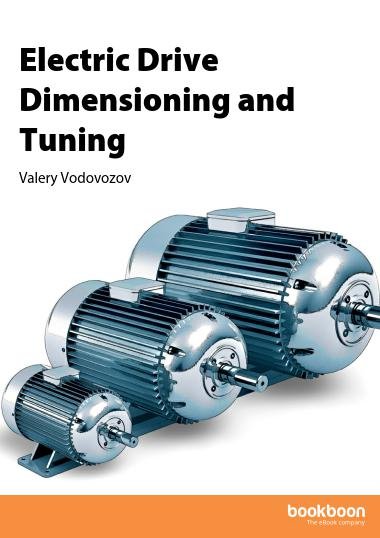
An electric drive is the electromechanical system that converts electrical energy into mechanical motion, working together with the driven object—such as machine tools, industrial equipment, vehicles, home appliances, and medical or domestic devices. This book is designed for secondary-level and university-level learners in electromechanical fields, including bachelor’s and master’s students, and also for technicians and engineers. It introduces the basic laws governing driving and driven systems, dividing complex behavior into simpler parts and developing models from ideal linear assumptions toward distributed, nonlinear, and non-stationary effects. Topics include electric-drive properties, efficiency, universal machine modeling, motor types and drives, scalar and vector control methods, and practical issues in speed/torque regulation and dynamic performance.
فهرس المحتويات
Preface
1 Introduction
1.1 A science of electric drive
1.2 Electromechanical processes
1.3 Efficiency of electric drive
2 Common Properties of Electric Drives
2.1 Power topologies of electric drives
2.2 Control topologies of electric drives
3 Characteristics of Electric Drives
3.1 Dynamic characteristics
3.2 Static characteristics
3.3 Load characteristics
4 Universal Model of Electrical Machine
4.1 Park’s machine
4.2 Coordinate transformation
4.3 DC motor
5 Synchronous Motor Drives
5.1 Field-excited synchronous motor drive
5.2 Synchronous servo drive
5.3 Step motor drive
6 Squirrel-Cage Induction Motor Drive
6.1 Models of induction motor
6.2 Performance characteristics
6.3 Braking modes
7 Special Types of Induction Motor Drives
7.1 Pole-changing
7.2 Wound rotor induction motor drive
7.3 Double-phase operation
8 Scalar Control of Induction Motors
8.1 Voltage-frequency control
8.2 Flux-frequency control
9 Vector Control of Induction Motors
9.1 Field-oriented control
9.2 Direct torque control
9.3 Tracking and positioning
معاينة
This book is intended primarily for the secondary-level and university-level learners of an electromechanical profile, including the bachelor and master students majored in electrical engineering and mechatronics. It will help also technicians and engineers of respective specialities.

لا توجد تقييمات بعد