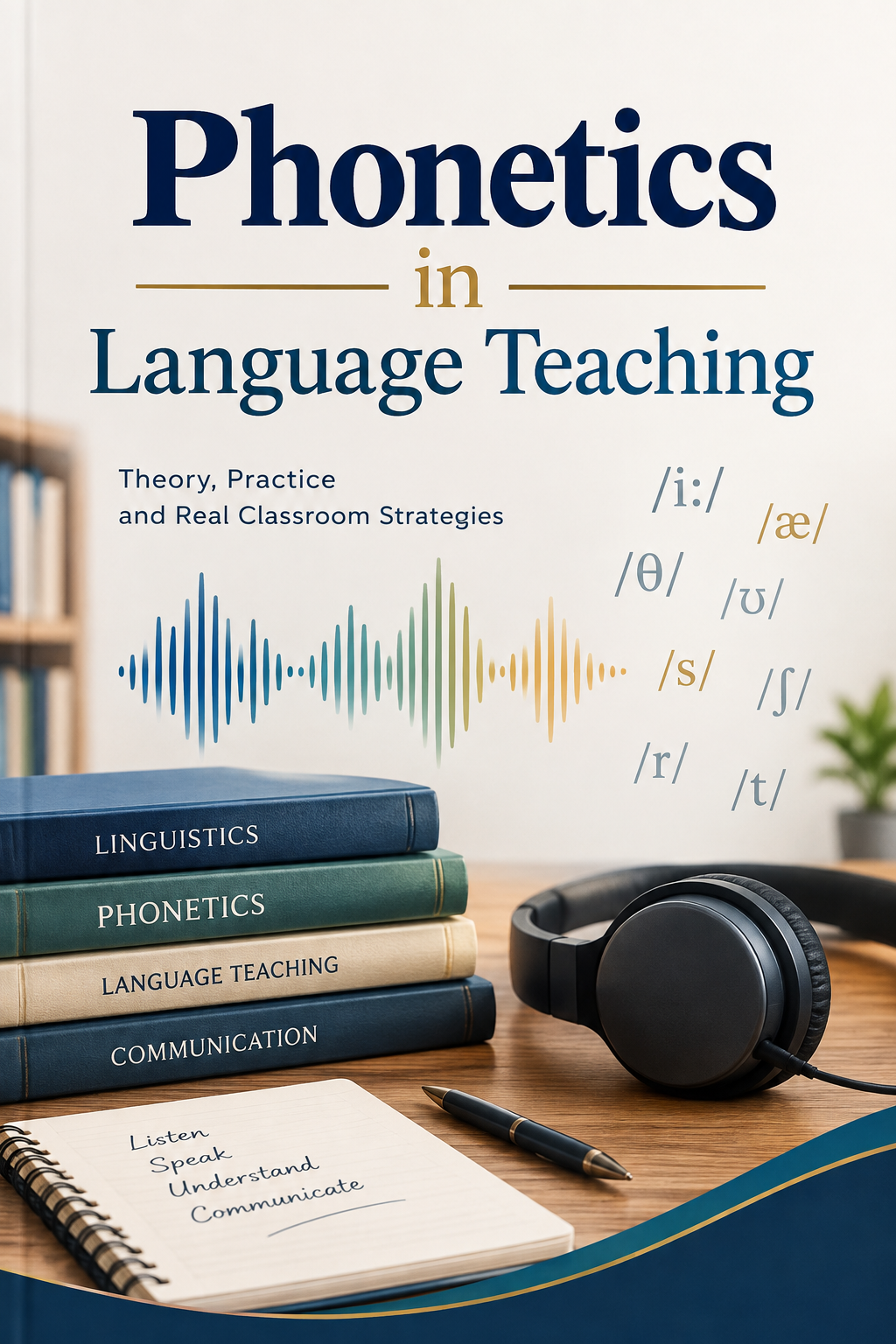
Phonetics in Language Teaching
Practical phonetics guidance for improving pronunciation teaching and intelligibility.
جديد هنا؟ لا تحتاج إلى حساب، سننشئ لك واحداً في ثوانٍ عند الدفع. لديك حساب؟ سجّل الدخول
لماذا تقرأ هذا الكتاب؟
- • Learn phonetics skills teachers need: description, classification, and IPA transcription.
- • Focus on intelligibility and what to prioritize for different learners and contexts.
- • Understand how sounds change in context—connected speech and coarticulation.
- • Teach prosody: stress, rhythm, and intonation for clearer communication.
- • Get practical classroom ideas plus technology resources for pronunciation instruction.
الوصف
This Element explores how language teachers—especially teachers of English—can benefit from knowledge of phonetics. It provides recommendations for introducing and improving pronunciation teaching in the classroom, connecting phonetic knowledge and skills to listening, speaking, and pronunciation. The book emphasizes that while many examples come from North American English, English language teaching today often occurs in lingua franca settings where students may not want to mimic all native-speaker patterns. Instead, the focus is on achieving intelligibility. Covering phonetic transcription (IPA), articulation of consonants and vowels, connected speech processes, and prosody (stress, rhythm, intonation), the Element also addresses pedagogical priorities, research-informed guidelines, and technology-based tools to support pronunciation teaching.
فهرس المحتويات
Introduction
Phonetic Transcription
Articulation of Segments
Coarticulation and Connected Speech Processes
Prosody
Advances, Issues, and Technology
Conclusion
Glossary
References










لا توجد تقييمات بعد