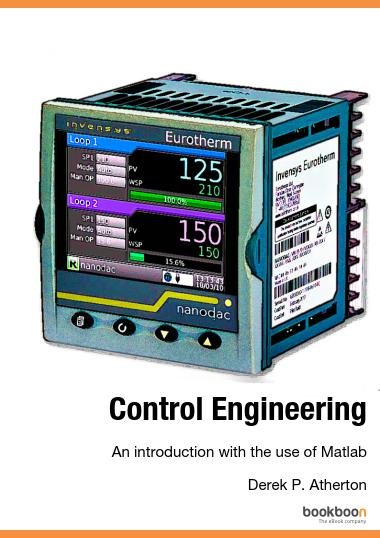
Unlock the Foundations of Control Engineering with a Trusted Guide
Control Engineering (2nd edition) by Derek P. Atherton offers a clear, practical path into the world of continuous linear feedback control for single-input single-output (SISO) systems. This book is built for engineers and students who want to translate mathematical theory into real-world control solutions, with a steady emphasis on how MATLAB can be used to model, analyze, and design control systems. Whether you are building a first project or refining your expert skills, this text provides the rigorous grounding and hands-on approach you need to succeed in dynamic environments.
About the Book
The author begins with the core mathematical models that govern control systems—differential equations, transfer functions, and state space representations—and demonstrates how to manipulate these models to predict and shape system behavior. From the outset, readers see how these formalisms connect to practical tasks, such as designing controllers that achieve desired performance in the presence of disturbances and uncertainties.
A central feature of the book is its focus on MATLAB as a working tool. Readers learn to implement models, simulate responses, and perform controller design within a familiar, industry-standard environment. This practical integration of theory and software accelerates learning and builds confidence in applying control concepts to real projects.
Key Concepts You’ll Master
- Time and frequency domain analysis: Understand step, impulse, and sinusoidal responses, and how these reveal system characteristics like stability, damping, and bandwidth.
- Feedback loop structure: Analyze the classic closed-loop arrangement, exploring how feedback improves performance and robustness.
- Stability criteria: Examine multiple criteria used to determine whether a system will behave predictably under feedback.
- Classical controller design: Learn lead/lag compensation and PID control, with practical guidelines for tuning and implementation.
- Parameter optimization: Explore methods to fine-tune controller parameters for optimal performance and reliability.
- Time-delay effects and root locus: Address real-world challenges where delays impact response, and visualize how pole locations affect stability and response.
- State-space methods and state feedback: Delve into modern representation techniques, including LQR for optimal state feedback control.
Who Should Read This Book
This text is ideal for undergraduate and graduate students learning control theory for the first time, as well as practicing engineers seeking a robust refresher that links theory to MATLAB-based practice. If you are responsible for designing, analyzing, or optimizing SISO control systems, this book provides the essential toolkit you need—grounded in math, demonstrated with clear examples, and reinforced by hands-on computational work.
Why This Book Stands Out
What sets Control Engineering apart is its deliberate blend of mathematical rigor with practical application. The book systematically builds from fundamental models to advanced design techniques, ensuring that readers not only know how to derive equations but also how to translate them into reliable controllers. The MATLAB-centric approach mirrors real engineering workflows, helping you move from concept to tested solution with confidence. From basic step responses to sophisticated state-feedback design, the book offers a cohesive, scalable path through the discipline.
What You’ll Learn (Highlights)
- Modeling a SISO system using differential equations, transfer functions, and state-space representations.
- Interpreting time-domain responses (step, impulse) and frequency-domain behavior to assess performance.
- Designing and tuning classical controllers, including PID, for practical performance goals.
- Using root locus and time-delay analysis to understand stability margins and robustness.
- Applying state-space techniques for modern control design, including LQR for optimal feedback.
- Leveraging MATLAB to implement and test models, controllers, and simulations—bridging theory and practice.
Closing Thoughts: Build Confidence, Deliver Results
Control Engineering (2nd edition) equips you with a solid, practice-ready foundation for designing and analyzing control systems. The integrated treatment of modeling, analysis, and design—coupled with hands-on MATLAB workflows—makes this a compelling resource for turning theoretical concepts into reliable, high-performance controls. If you’re preparing for coursework, professional certification, or real-world projects, this book is a trusted companion that guides you from fundamentals to advanced techniques with clarity and authority.