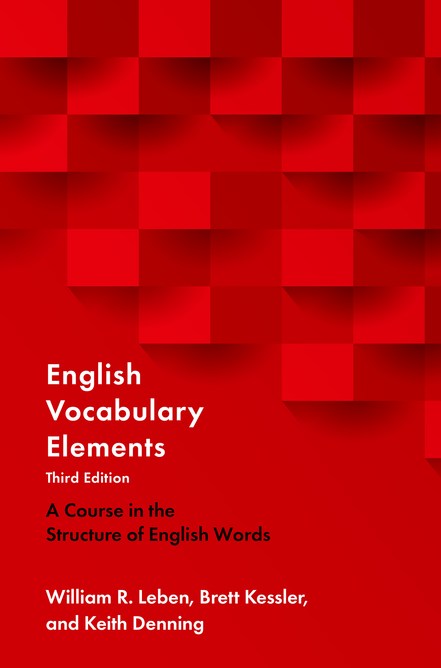
English vocabulary elements : a course in the structure of English words
Analyze English word structure from sounds to meaning.
جديد هنا؟ لا تحتاج إلى حساب، سننشئ لك واحداً في ثوانٍ عند الدفع. لديك حساب؟ سجّل الدخول
لماذا تقرأ هذا الكتاب؟
- • Learn to parse complex words into meaningful elements.
- • Understand predictable patterns in pronunciation and spelling.
- • Trace how English vocabulary developed through borrowing and change.
- • Explore meaning change, usage, and variation across Englishes.
الوصف
English Vocabulary Elements: A Course in the Structure of English Words (Third Edition) guides college-level readers through how English words are built and how their parts—sounds, word elements, and entire words—work together. Rather than treating vocabulary as a memorization list, the book develops skills for analyzing complex words, tracing how English vocabulary developed over time, and understanding why meanings and usages shift. Chapters cover morphology (how words are formed), allomorphy (how word elements vary in form), phonetics (how pronunciation patterns connect to word structure), and meaning change. It also explores English’s borrowing history and variation across regions and communities. Designed for both native and nonnative English speakers, it aims to strengthen vocabulary growth, reading comprehension, and informed judgment about usage and spelling.
فهرس المحتويات
Preface
List of Figures
List of Tables
Symbols and Abbreviations
About the Companion Website
1. The Wealth of English
2. The History of English and Sources of English Vocabulary
3. Morphology: The Structure of Complex Words
4. Allomorphy
5. Phonetics
6. Regular Allomorphy; Numeric Elements
7. Meaning Change
8. Usage and Variation
9. Latin and Greek Affixes in English
10. The Prehistory of English and the Other Indo-European Languages
11. Later Changes: From Latin to French to English
Appendix 1. Elements to Glosses
Appendix 2. Glosses to Elements
Glossary
Further Reading and Research Tools
Index
معاينة
In the number of speakers who learn it as a first or second language, and in its range of uses and adaptability to general and specific tasks, English is the world’s most important language today. It is the mother tongue of several hundred million people. Its rich verbal art, great works in science and scholarship, and major role in international commerce and culture have made English the most frequently taught second language in the world.
English is not the first language of as many individuals as Mandarin Chinese. But it is spoken over a much vaster area. In North America, Europe, Asia, Africa, and elsewhere, it is the official language of many nations, including some where English is not most people’s first language. Native speakers of English number about 5 percent of the world’s population, yet over 60 percent of websites are in English.




لا توجد تقييمات بعد