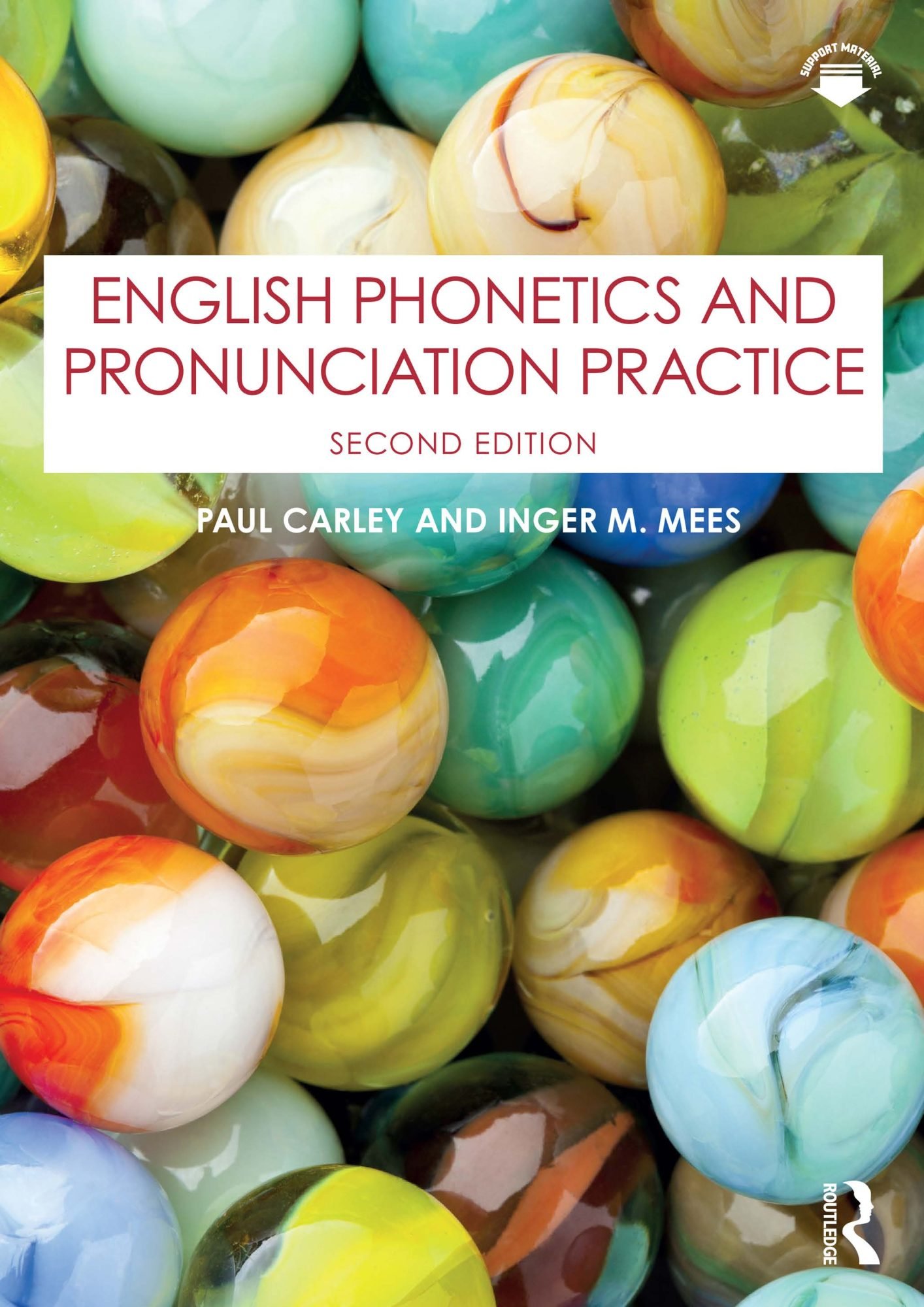
English Phonetics and Pronunciation Practice
Practical training in modern British English pronunciation and phonetics.
جديد هنا؟ لا تحتاج إلى حساب، سننشئ لك واحداً في ثوانٍ عند الدفع. لديك حساب؟ سجّل الدخول
لماذا تقرأ هذا الكتاب؟
- • Learn the articulation behind British English sounds, from consonants to vowels.
- • Practice contrasts in realistic contexts, including common confusions.
- • Use extensive online audio for accurate listening and imitation.
- • Get a clear balance of theory explanations and guided practice.
الوصف
English Phonetics and Pronunciation Practice provides a practical introduction to basic articulatory phonetics for students of English. It teaches the pronunciation of modern standard non-regional British English for intermediate and advanced learners worldwide. This fully updated second edition is more concise and reorganised into shorter, easier-to-follow chapters. It provides an up-to-date description of British English pronunciation, demonstrates how English consonants and vowels work in many different contexts, and shows contrasts with sounds that learners commonly confuse. Expanded theory sections support a clear balance of explanation and practice, while extensive online audio material helps you hear and reproduce the sounds accurately. Ideal for classroom use or independent study, it offers step-by-step guidance and abundant examples for pronunciation improvement.
فهرس المحتويات
Preface
Chapter 1 Basic concepts
1.1 Phonemes and allophones
1.2 Spelling and sound
1.3 Stress
1.4 Pronunciation varieties
Chapter 2 Introduction to consonants
2.1 The vocal tract
2.2 Describing consonants
2.3 Voicing
2.4 Fortis and lenis
2.5 Place of articulation
2.6 Manner of articulation
2.7 Obstruents and sonorants
2.8 Double and secondary articulations
2.9 Combining voicing, place and manner
Chapter 3 Plosives 1
3.1 The plosives /p b t d k ɡ/
3.2 The stages of plosives
3.3 Aspirated voiceless plosives /p t k/
3.4 Unaspirated voiceless plosives /p t k/
3.5 Aspirated voiceless plosives /p t k/ + approximants /j w r l/
3.6 Unaspirated voiceless plosives /p t k/ + approximants /j w r l/
3.7 Devoicing of voiced plosives /b d ɡ/
3.8 Allophones of /t d/: variation in place of articulation
3.9 Fricative release of /t d/ in /tr/ and /dr/
Chapter 4 Plosives 2
4.1 Unreleased plosives
4.2 Inaudible release
4.3 Voiceless glottal plosive [ʔ]
4.4 Glottal replacement of /t/
4.5 Glottal reinforcement of /p t k/
4.6 Ejective /p t k/
4.7 Hard attack
4.8 Pronunciation of -ed
4.9 Further allophones
Chapter 5 Practising plosives
5.1 Voiceless bilabial plosive /p/
5.2 Voiced bilabial plosive /b/
5.3 Voiceless alveolar plosive /t/
5.4 Voiced alveolar plosive /d/
5.5 Voiceless velar plosive /k/
5.6 Voiced velar plosive /ɡ/
Chapter 6 Fricatives
6.1 The fricatives /f v θ ð s z ʃ ʒ h/
6.2 Devoicing of voiced fricatives /v ð z ʒ/
6.3 Sibilants
6.4 Voiceless glottal fricative /h/
6.5 Distribution of fricatives
6.6 Pronunciation of -s
Chapter 7 Practising fricatives
7.1 Voiceless labio-dental fricative /f/
7.2 Voiceless labio-dental fricative /v/
7.3 Voiceless dental fricative /θ/
7.4 Voiced dental fricative /ð/
7.5 Voiceless alveolar fricative /s/
7.6 Voiced alveolar fricative /z/
7.7 Voiceless palato-alveolar fricative /ʃ/
7.8 Voiced palato-alveolar fricative /ʒ/
7.9 Voiceless glottal fricative /h/
Chapter 8 Affricates
8.1 The affricates /ʧ ʤ/
8.2 The stages of affricates
8.3 Devoicing of voiced affricate /ʤ/
8.4 Sequences of affricate + stop
8.5 Glottal reinforcement of /ʧ/
8.6 /t/ + /j/ and /d/ + /j/
8.7 /n/ + affricate /ʧ ʤ/
8.8 /n/ + /ʃ/
8.9 Affricate vs. plosive + fricative
Chapter 9 Practising affricates
9.1 Voiceless palato-alveolar affricate /ʧ/
9.2 Voiced palato-alveolar affricate /ʤ/
Chapter 10 Nasals
10.1 The nasals /m n ŋ/
10.2 Distribution of nasals
10.3 Nasal + plosive at the end of words
10.4 Nasal + plosive within words
10.5 Nasal + voiceless fricative
10.6 Nasal release
10.7 Nasal approach
10.8 Pre-fortis clipping
10.9 Further allophones
Chapter 11 Practising nasals
11.1 Voiced bilabial nasal /m/
11.2 Voiced alveolar nasal /n/
11.3 Voiced velar nasal /ŋ/
Chapter 12 Approximants
12.1 The approximants /j w r l/
12.2 Semi-vowels /j w/
12.3 Distribution of semi-vowels
12.4 Yod-dropping
12.5 Distribution of /r/
12.6 Voiced alveolar lateral approximant /l/
12.7 Lateral release
12.8 Lateral approach
12.9 Clear and dark /l/
12.10 /l/-vocalisation
12.11 Pre-fortis clipping
12.12 Further allophones
Chapter 13 Practising approximants
13.1 Voiced palatal approximant /j/
13.2 Voiced labial-velar approximant /w/
13.3 Voiced post-alveolar approximant /r/
13.4 Voiced alveolar lateral approximant /l/
Chapter 14 Introduction to vowels 1
14.1 Describing vowels
14.2 Tongue shape
14.3 Lip shape
14.4 Vowel labels
14.5 The English vowels
14.6 Short and long vowels
14.7 Monophthongs and diphthongs
14.8 Checked and free vowels
14.9 Strong and weak vowels
14.10 /r/-liaison vowels
Chapter 15 Introduction to vowels 2
15.1 Pre-fortis clipping
15.2 Influence of dark /l/
15.3 Pre-/l/ breaking
15.4 Monophthonging of centring diphthongs
15.5 Diphthong + schwa /e/ sequences
15.6 Smoothing
15.7 Fronting, lowering, raising
15.8 Happy tensing
15.9 Vowel length and phonemic contrasts
Chapter 16 Short vowels
16.1 Describing the short vowels /ɪ ʊ e æ ʌ ɒ ə/
16.2 The stressed kit /ɪ/ vowel
16.3 The unstressed kit /ɪ/ vowel
16.4 The foot /ʊ/ vowel
16.5 The dress /e/ vowel
16.6 The trap /æ/ vowel
16.7 The strut /ʌ/ vowel
16.8 The lot /ɒ/ vowel
16.9 Schwa /ə/
16.10 Notable allophones
Chapter 17 Practising short vowels
17.1 The kit /ɪ/ vowel
17.2 The foot /ʊ/ vowel
17.3 The dress /e/ vowel
17.4 The trap /æ/ vowel
17.5 The strut /ʌ/ vowel
17.6 The lot /ɒ/ vowel
17.7 Schwa /ə/
Chapter 18 Long vowels
18.1 Describing the long vowels /iː uː ɛː ɜː ɔː ɑː/
18.2 The stressed fleece /iː/ vowel
18.3 The unstressed fleece /iː/ vowel
18.4 The stressed goose /uː/ vowel
18.5 The unstressed goose /uː/ vowel
18.6 The square /ɛː/ vowel
18.7 The nurse /ɜː/ vowel
18.8 The thought /ɔː/ vowel
18.9 The palm /ɑː/ vowel
18.10 Notable allophones
Chapter 19 Practising long vowels
19.1 The fleece /iː/ vowel
19.2 The unstressed fleece /iː/ vowel
19.3 The goose /uː/ vowel
19.4 The square /ɛː/ vowel
19.5 The nurse /ɜː/ vowel
19.6 The thought /ɔː/ vowel
19.7 The palm /ɑː/ vowel
Chapter 20 Diphthongs
20.1 Describing the diphthongs /eɪ aɪ ɔɪ əʊ aʊ ɪə ʊə/
20.2 Symbols used for diphthongs
20.3 The face /eɪ/ vowel
20.4 The price /aɪ/ vowel
20.5 The choice /ɔɪ/ vowel
20.6 The goat /əʊ/ vowel
20.7 The mouth /aʊ/ vowel
20.8 The near /ɪə/ vowel
20.9 The cure /ʊə/ vowel
20.10 Notable allophones
Chapter 21 Practising diphthongs
21.1 The face /eɪ/ vowel
21.2 The price /aɪ/ vowel
21.3 The choice /ɔɪ/ vowel
21.4 The goat /əʊ/ vowel
21.5 The mouth /aʊ/ vowel
21.6 The near /ɪə/ vowel
21.7 The cure /ʊə/ vowel
Chapter 22 Syllabic consonants
22.1 Syllables
22.2 Syllabic consonants
22.3 Syllabic /l/
22.4 Syllabic /n/
22.5 Syllabic /m/
22.6 De-syllabification
22.7 Sequences of syllabic consonants
Chapter 23 Practising syllabic consonants
23.1 Syllabic /l/
23.2 Syllabic /n/
Chapter 24 Weak forms 1
24.1 Strong forms and weak forms
24.2 Contractions
24.3 Contractions with not
24.4 Obsolete weak forms
24.5 The use of strong forms
Chapter 25 Weak forms 2
25.1 Weak forms of BE
25.2 Weak forms of HAVE
25.3 Weak forms of DO
25.4 Weak forms of modal verbs
25.5 Weak forms of prepositions
25.6 Weak forms of pronouns
25.7 Weak forms of determiners
25.8 Weak forms of conjunctions
25.9 Weak form of existential there
Chapter 26 Practising weak forms
26.1 Weak forms of am: /əm/, /m/
26.2 Weak forms of are: /ə/, you’re /jɔː/, we’re /wɪə/, they’re /ðɛː/
26.3 Weak forms of is: /z/, /s/
26.4 Weak form of was: /wəz/
26.5 Weak form of were: /wə/
26.6 Weak forms of have: /həv/, /əv/, /v/
26.7 Weak forms of has: /həz/, /əz/, /z/, /s/
26.8 Weak forms of had: /həd/, /əd/, /d/
26.9 Weak form of do: /də/
26.10 Weak form of does: /dəz/
26.11 Weak forms of will: /əl/, /l̩ /, /l/
26.12 Weak forms of would: /əd/, /d/
26.13 Weak form of can: /kən/
26.14 Weak form of at: /ət/
26.15 Weak form of from: /frəm/
26.16 Weak form of for: /fə/
26.17 Weak form of of: /əv/
26.18 Weak form of to: /tə/
26.19 Weak form of he: /iː/
26.20 Weak form of him: /ɪm/
26.21 Weak form of his: /ɪz/
26.22 Weak form of pronoun her: /ə/
26.23 Weak form of possessive her: /ɜː/
26.24 Weak form of us: /əs/
26.25 Weak form of them: /ðəm/
26.26 Weak forms of a /ə/, an /ən/ and the /ðə/
26.27 Weak form of some: /səm/
26.28 Weak form of and: /ən/
26.29 Weak form of but: /bət/
26.30 Weak form of as: /əz/
26.31 Weak form of than: /ðən/
26.32 Weak form of that: /ðət/
26.33 Weak form of existential there: /ðə/
Chapter 27 Consonant clusters
27.1 English consonant clusters
27.2 Initial clusters of two consonants
27.3 Initial clusters of three consonants
27.4 Final clusters of two consonants without a suffix
27.5 Final clusters of two consonants with a suffix
27.6 Final clusters of three consonants
27.7 Final clusters of four consonants
Chapter 28 Practising consonant clusters
28.1 Initial two-consonant clusters
28.2 Initial three-consonant clusters /spj skj skw spl spr str skr/
28.3 Final two-consonant clusters without a suffix
28.4 Final two-consonant clusters with a suffix
28.5 Final three-consonant clusters with a suffix
28.6 Final three-consonant clusters without a suffix
Chapter 29 Connected speech 1
29.1 Connected speech processes
29.2 Elision: /t d/
29.3 Elision of the -ed suffix
29.4 Elision in word formation
29.5 Elision of /k/ in /sk/
29.6 Elision of /p/ in /mpt/ and /k/ in /ŋkt/
29.7 Liaison
29.8 Liaison and weak forms
29.9 Liaison in word formation
29.10 Liaison with /j/ and /w/?
Chapter 30 Connected speech 2
30.1 Types of assimilation
30.2 Place assimilation: /t d n/
30.3 Place assimilation: /s z/
30.4 Perseverative place assimilation: /n/
30.5 Place assimilation in word formation
30.6 Voicing assimilation
30.7 Manner assimilation: /ð/
30.8 Coalescent assimilation
Suggested reading
Index
معاينة






لا توجد تقييمات بعد