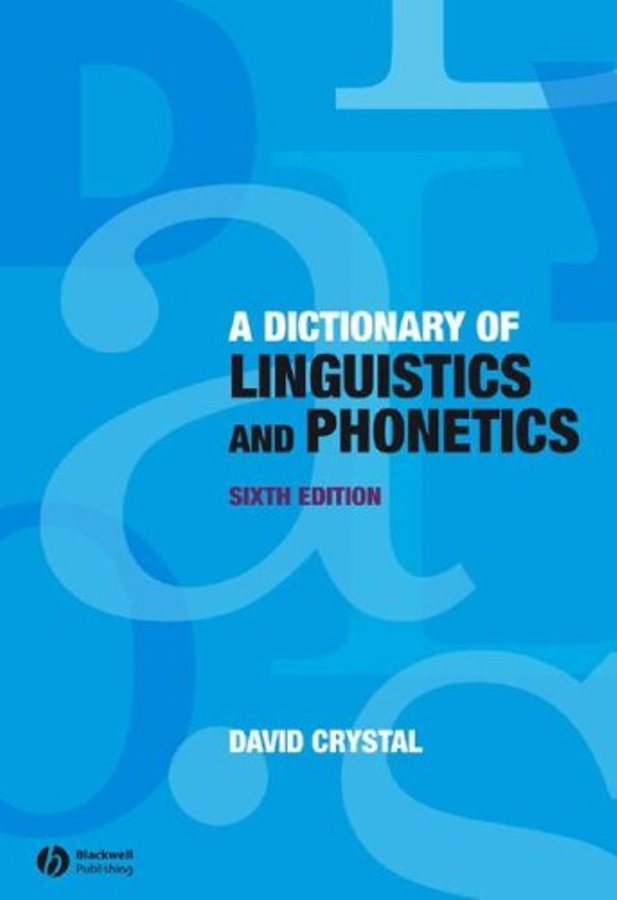
A Dictionary of Linguistics and Phonetics
A trusted guide to linguistics terminology and phonetic concepts.
جديد هنا؟ لا تحتاج إلى حساب، سننشئ لك واحداً في ثوانٍ عند الدفع. لديك حساب؟ سجّل الدخول
لماذا تقرأ هذا الكتاب؟
- • Find clear definitions of core linguistics and phonetics terms, alphabetically.
- • Use the International Phonetic Alphabet and supporting lists to interpret notation.
- • Follow cross-references between related concepts across grammar, semantics, and phonology.
- • Designed for readers who need dependable explanations of specialized terminology.
الوصف
A Dictionary of Linguistics and Phonetics (Sixth Edition) is a comprehensive, alphabetical reference to key terms used in linguistics and phonetics. It is designed to help readers navigate the fast-growing and sometimes confusing terminology of the field by providing clear, authoritative explanations and cross-references between related concepts. The book also includes front matter such as lists of abbreviations and symbols, and a section on the International Phonetic Alphabet, making it especially useful for students, teachers, and researchers who need quick definitions and conceptual clarification. As reflected in the preface, the dictionary is built on historical principles and aims to document twentieth-century terminology, supporting both learning and professional study.
فهرس المحتويات
Preface to the Sixth Edition
Acknowledgements
List of Abbreviations
List of Symbols
The International Phonetic Alphabet
Alphabetical Entries
معاينة
yer (n.) In the phonology of Slavic languages (e.g. Polish), a term used to
describe a type of very short high vowel which appears only in certain contexts;
also spelled jer. It has been seen as an illustration of a ghost segment, and
the question of its representation has attracted particular attention in non-linear phonology. See also hard consonant, soft consonant.
yes–no question (y/n) A term used in the grammatical subclassification of
types of question to refer to a question form where a grammatical reply would
have to be of the type yes or no. It is formally marked by inverted subject–
verb order, e.g. is she going? These ‘general’ or ‘inverted order’ questions are
contrasted with WH-questions.
yo-ho-ho theory The name of one of the speculative theories about the origins
of language: it argues that speech arose because, as people worked together,
their physical efforts produced communal, rhythmical grunts, which in due
course developed into chants, and thus language. The main ...








لا توجد تقييمات بعد