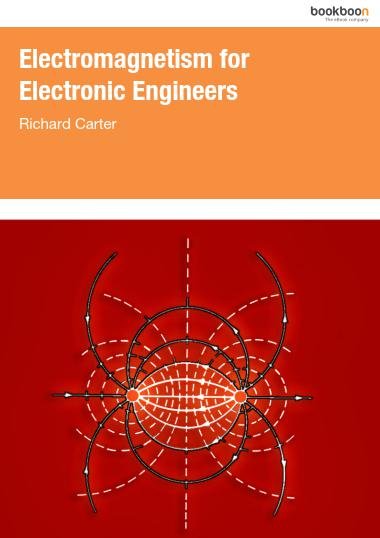
Hook: Where Theory Meets Practice in the Modern Electronics Lab
Electromagnetism is the vibrant backbone of modern electronics, from the wireless signals that connect devices to the power systems that keep them running. For electronic engineers, a solid grasp of electromagnetic principles isn’t just academic—it’s the key to creating reliable circuits, optimizing signal integrity, and innovating new technologies. This book, Electromagnetism For Electronic Engineers, invites you to see the field not as abstract equations, but as a practical toolkit you can apply in real-world design challenges.
About the Book
The author takes a clear, methodical approach to electromagnetism with the needs of electronics engineers in mind. The book builds from core concepts—vectors, fields, and Maxwell’s equations—toward tangible engineering applications. You’ll find explanations that connect theory to practice, helping you translate mathematical results into circuit behavior, electromagnetic compatibility, and radio-frequency performance. Whether you’re drafting a high-speed digital interface, designing RF front-ends, or addressing power integrity in complex systems, this volume positions you to design with confidence and clarity.
What You’ll Learn (Key Takeaways)
- Fundamental Concepts: Master the language of fields, waves, and interfaces that underpin all electronic devices.
- Maxwell’s Equations in Action: See how the core laws govern real-world phenomena in circuits, antennas, and substrates.
- Electromagnetic Propagation: Understand wave behavior in different media, guiding the design of cables, traces, and transmission lines.
- Electromagnetic Compatibility: Learn strategies to minimize interference, noise, and unintended coupling in complex systems.
- RF and Microwave Principles: Apply resonance, impedance, and field concepts to antennas, filters, and high-frequency components.
- Power and EMI/EMC Considerations: Balance efficiency, safety, and compliance while maintaining robust operation.
- Simulation and Measurement Link: Bridge theory with practical tools, using models and experiments to validate designs.
Who Should Read This Book
This book is tailored for practicing electronic engineers, design engineers, and senior students who want a pragmatic, design-forward understanding of electromagnetism. It speaks directly to those who need to predict how fields affect devices, improve signal integrity, and meet real-world performance targets. If you work on wireless, high-speed digital systems, RF front-ends, or power electronics, this book will become an indispensable reference on your desk.
Why It Stands Out
What sets Electromagnetism For Electronic Engineers apart is its relentless focus on engineering relevance. The author translates complex theoretical constructs into actionable insights, bridging math and measurable outcomes. The chapters are structured to support both quick reference during a design session and deeper study when tackling a challenging problem. Expect crisp diagrams, practical examples, and problem-solving approaches that align with typical engineering workflows—from schematic planning to prototype testing and verification.
Closing: Your Next Step Toward Smarter Designs
Electromagnetism For Electronic Engineers is more than a textbook; it is a practical companion for engineers who want to design with the confidence that comes from a solid electromagnetic foundation. By merging rigorous theory with real-world application, the author equips you to anticipate issues, optimize performance, and push the boundaries of what electronic systems can achieve. If you're ready to elevate your design discipline and deliver robust, compliant, high-performance electronics, this book is the resource you’ve been waiting for.