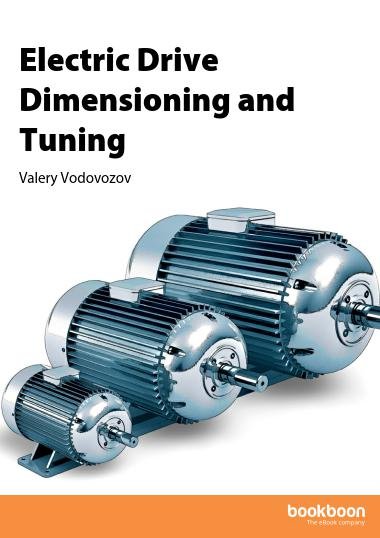
Hook: Elevate Your Electric Drive Projects with Precision Dimensioning and Tuning
When you design an electric drive, every choice—from motor selection to control tuning—affects performance, reliability, and efficiency. Electric Drive Dimensioning and Tuning guides engineers through a practical, end-to-end approach to matching components, planning loads, and shaping control systems. Whether you’re optimizing a conveyor, robotics axis, or any motion system, this book provides the rigorous methods and actionable strategies you need to deliver drives that meet load demands with minimal overshoot, acceptable settling times, and low tracking errors.
About the Book
The book begins with project planning and load calculations, emphasizing how operating modes, safety factors, thermal limits, duty cycles, friction, and moments of inertia influence drive design. It then dives into mechanical transmissions, detailing how forces, torques, and elastic effects—such as gaps, backlash, and oscillations—alter drive dynamics. The second half shifts to modeling and control, covering transfer functions, regulator and filter design (both analogue and digital), static accuracy, and core control principles including modal control, sequential correction, and cascading. Practical tuning strategies for speed, combined speed-current, path control, and elastic loads round out a comprehensive curriculum for engineers seeking robust, high-performance drives.
What You’ll Learn (Key Takeaways)
- Project planning and load calculations: how to account for operating modes, thermal and duty considerations, friction, and inertia to size drives accurately.
- Mechanical transmission effects: understanding how forces, torques, gaps, backlashes, and elastic dynamics impact response and stability.
- Modeling and control fundamentals: transfer functions, regulator and filter design, and static accuracy considerations for precise motion control.
- Control strategies: mastering modal control, sequential correction, and cascading approaches to achieve balanced performance across multiple axes.
- Practical tuning techniques: effective methods for speed tuning, speed-current tuning, path control, and managing elastic loads.
Who Should Read This Book
This book is essential for electrical and mechanical engineers, control engineers, and technicians responsible for designing, implementing, and tuning electric drives. It’s equally valuable for students seeking a rigorous foundation in drive dimensioning and tuning, as well as professionals looking for a practical reference to inform real-world projects. If you work with motors, gears, power converters, or sophisticated control loops—and you want predictable performance with minimized overshoot and errors—this book is for you.
Why It Stands Out
Electric Drive Dimensioning and Tuning stands out by integrating mechanical dynamics with control theory in a cohesive, application-focused framework. Rather than presenting isolated topics, the book ties load planning, transmission mechanics, and control design into a single workflow. Readers gain a deep understanding of how each design decision cascades through the system, enabling more reliable specifications, easier tuning, and superior performance. The practical tuning strategies are grounded in real-world constraints, making them immediately transferable to projects from prototyping to production.
Closing: Build Drives You Can Trust
With a clear path from load calculation to final tuning, this book equips you to deliver electric drives that meet demanding requirements—while reducing development time and costly iterations. Invest in these proven techniques to enhance performance, safety, and efficiency across your motion systems. Elevate your engineering practice by mastering dimensioning and tuning the way only a comprehensive, practitioner-focused guide can deliver.